

Frozen

February, 2026
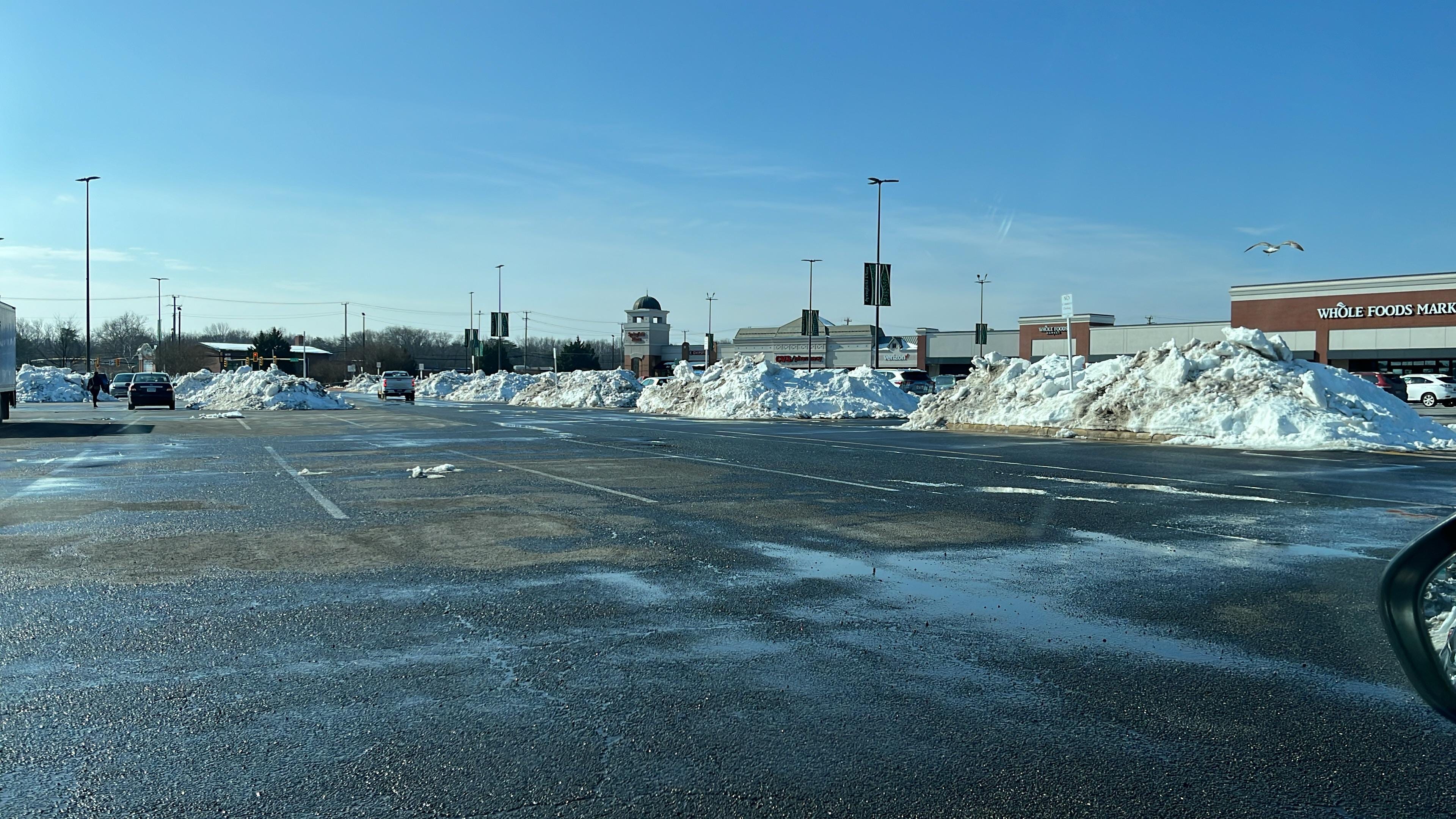
My mom was backing out of the driveway. She and my dad still live in the house where my brother and I grew up, in Springfield, Virginia, and around the start of the month, a storm had dumped an enormous load of snow along the eastern United States that immediately froze into a solid sheet, like a stale layer of icing. Temperatures sank far below freezing for weeks, and so, unless someone had shoveled the snow right as it touched the ground, it had simply stayed. My dad had scraped out the driveway, but bulbous hills of ice still bubbled over the edges of the concrete. It was unavoidable. All the shoveled snow had to go somewhere.
Behind my mom, one of these ice lumps was in the way of her front left tire. She figured she could just back over it, only, as she did, her gray Camry lifted off the ground. Her tire mounted the small hill, and the snow held its shape. My mom was aloft. She tapped the gas and, as the car lurched back onto flat ground, the bumper clipped this immovable white mass and popped off.
She was not pleased.
Deceptively un-minor inconveniences like this were happening all over the neighborhood, the state, and much of the eastern half of the country. All that snowcrete had changed the logistics of everyones’ lives and had therefore, overnight, altered basic risk calculations about everyday activities.
Imagine my parents’ neighborhood from above, an amoeba-shaped blob of single family homes cut by three arterial roads that branch off into veins and capillaries. Picture the lawns green and the roads wide enough for three cars to drive alongside each other with ease, and then white-out all the green and shrink the width of every road by half, as though all those veins were instantly gunked up with cholesterol. Maybe you’d also visualized some sidewalks, but if you did, you’ll now have to rethink of them as a kind of physical morse code, beige dashes broken up by snow everywhere that owners of the adjacent home failed to shovel in time.
How many accidents happened because roads that lead to driveways were suddenly nowhere near the width they’d always been? How much money did all that cost? How many people slipped and cracked an ankle or crunched their tailbone as they were wheeling their garbage bins to the curb? I fractured my shin doing something like that when I was 25, just slipped on an ice slick and my legs swept out from under me.
One night my mom and dad watched as a neighbor turned into the unplowed cul-de-sac across the street and spun his wheels into a cloud of steam for an hour before getting out and walking the few remaining feet home, leaving his car in the the road for two days. Dad wanted to help push the car out of its rut, he said, but it was dark and all the ice made him worried he’d slip and fall. He told mom to at least stop watching the misery.
Just on the other side of one of the neighborhood’s small hills, the county has been digging up the road chunk by chunk to replace an active sewer, one of those projects that was supposed to be done in six months or whatever but is now just the New Reality. The people who live around there have had to park their cars a few blocks away since the work began. When the snow hardened into a thick, icy crust, that little journey to and from took on a kind of menace. You’ve probably heard at some point that climate change is a “threat multiplier,” that it takes a range of already bad things and makes them them that much worse. Analysts usually mean Important Things like “national security” when they talk about threats, but here was a threat multiplier much easier for us all to see.
One day during all this I was ranting on the phone to my dad about the state and county not doing enough for their residents — why had no one plowed the cul-de-sac? — and he said something like yeah but also what do you want them to do? They don’t have enough employees, and there is not enough money in their budgets to deal with something so far outside the scope of what they’ve seen before.
I think he’s right.
Climate change makes weather more volatile. Polar vortex winds normally swirl in a tight spiral around the Arctic, but they loosen when that part of the globe gets freakishly warm. Frigid bands of air droop into North America, sometimes as far down as the southern United States (maybe farther pretty soon, who knows). You plan for suddenly not so anomalous anomalies such as this by having a robust, flexible budget capable of pouring money and manpower into whatever the weather hurls at you. Before one of February’s storms, the government of New York City offered its residents $30 an hour ($45 for overtime) if they’d go out on the streets and shovel. The plan was a pretty good example of the kind of budget flexibility that is already necessary for cities and towns to deal with the increasingly brutal and unpredictable consequences of our planet’s runaway temperature, but many governments in the U.S. and elsewhere do not have this kind of cash or foresight.
Until that changes, it will be up to people and their neighbors to carve their own paths through the ice.
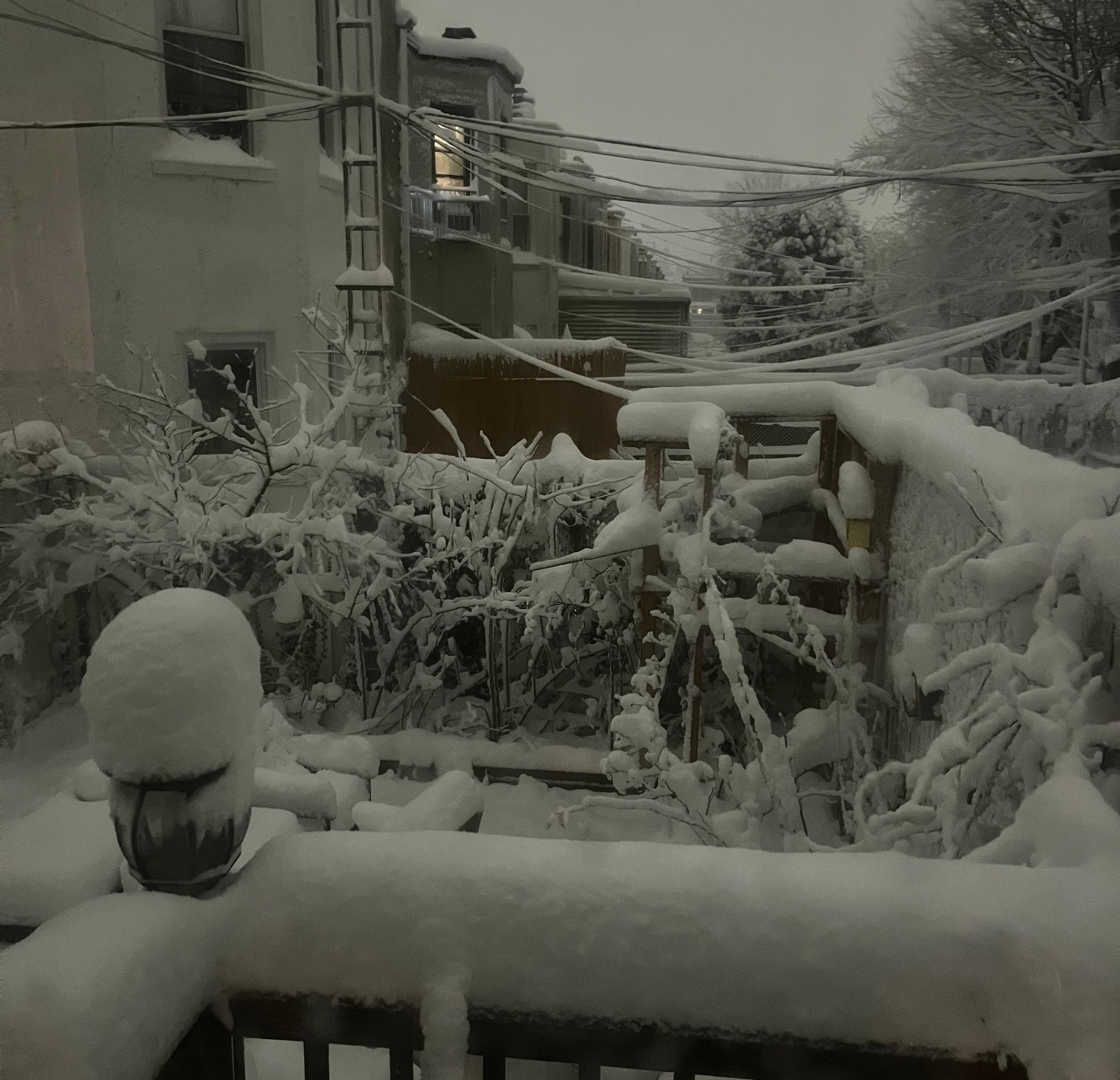
Brooklyn garden shoutout!