

Rain (3)

March and May, 2026
Bangalore
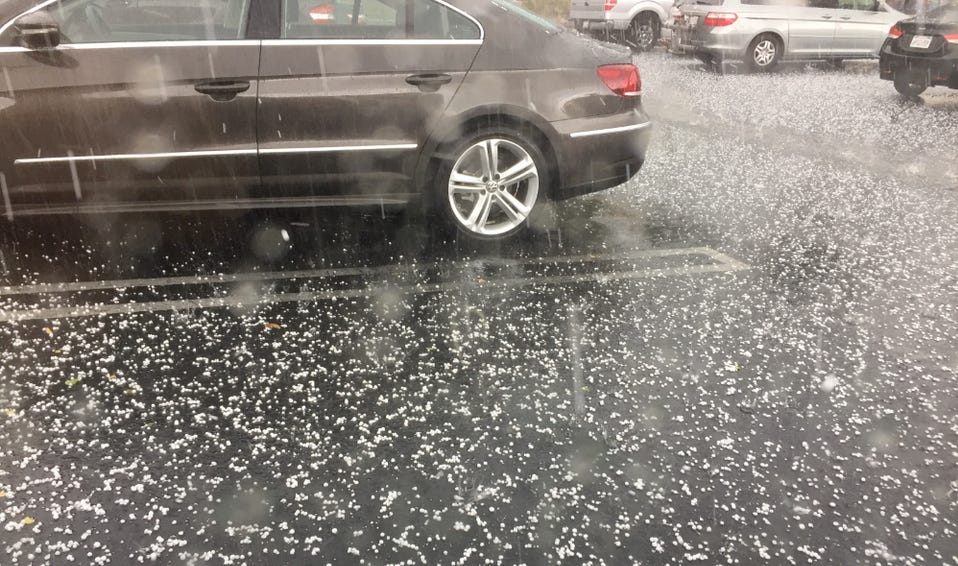
About a month ago Nikki and I were lying around at something like 7 p.m. when the rain shifted sideways and started battering against our balcony door. It’s so loud all of a sudden, I remember thinking. I got up to push the door open and saw little ice balls scattered across the tile, like tiny eggs. It was pretty early in the year for monsoon rain and I had never seen hail in Bangalore before, but I looked it up and saw that finding ice in early season storms was pretty common. Not everything is climate change, Colin, is what I said to myself.
The sound was back little more than a month later, like rain and ice were were trying to pelt through the walls. Out the windows I watched as the shower billowed across our apartment building’s courtyard like a curtain. This was rain, yes, but it seemed to be waterfalling from the clouds, squeezing out any space for air.
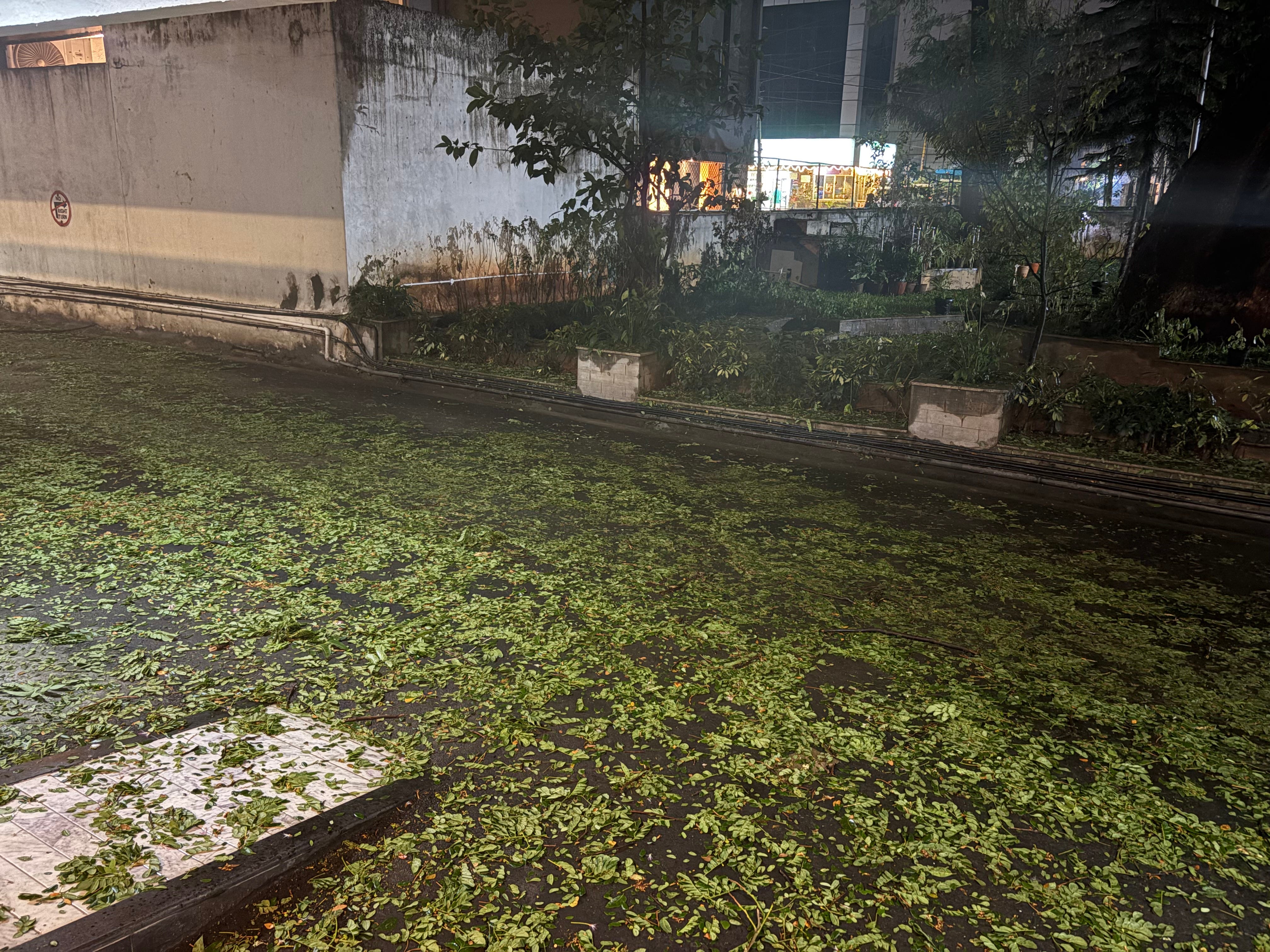
It didn’t last long, but cloud bursts never do. They gorge on moisture in excessively hot air until they pop, dumping a torrent of water over a small space in hardly any time. I walked outside to go for a run and the road was slathered in wet leaves, far more green than black, to the point that I slowed around curves to avoid doing involuntary splits. Some Bangaloreans stepped out and found enough ice to fill a cooler. I ran around the road that rings my apartment building and saw that the back corner was impassable unless I wanted to slosh through 20 meters of shin-deep water every lap, which I did not.
In the center of downtown, a shop called The Bookworm lost 4,000-5,000 books in around half an hour. Ice heaped on top of drains, forcing rainwater through the door, where it swamped stacks of books that lined the store. Once the water had receded, they laid what they could save out back and waited for the sun to flatten the pages’ new waterlogged curves.
Not 10 minutes away at Bowring Hospital, part of the wall that lined the property collapsed, killing seven people. Who’s to say why it toppled, really. Articles noted something about ongoing construction, or a pile of mud pushing against an adjacent wall, neither of which explained anything. A wall should be able to withstand an hour of rain, but that’s neither here nor there to the people buried underneath it.
Some of those people had run vendor carts that sold snacks and clothes to commuters on their way home, and some of those people had stopped to buy them. All of them had crowded against the wall when the rain started. I imagine it was far more than the first time that some of those commuters had pulled over for an evening coffee or chai. Everyone has their little spots between home and wherever they have to go.